REVIEW · WARSAW
Past Meets Present in Warsaw’s Jewish Ghetto
Book on Viator →Operated by Mona_be_your_guide · Bookable on Viator
Warsaw remembers in street-sized steps. This 2.5-hour walk ties together Jewish Ghetto history and today’s memorial culture in one steady route. I especially liked how the guide, Mona, keeps facts clear without losing the human weight of what happened.
Two things really worked for me: you get a tight stop-by-stop structure that makes the geography of the ghetto easier to hold in your head, and you also get emotional honesty—expect it to be heartfelt and hopeful, but also blunt. One thing to consider: the subject matter is heavy, so this is not the type of tour you do to relax.
In This Review
- Key moments that make this tour work
- A 2.5-hour Warsaw walk with built-in context
- Meet Mona: the tone that makes the walk land
- Stop-by-stop: what each place means and what to look for
- Zydowski Instytut Historyczny: documentary history you can picture
- Długa–Nalewki: the street corner where the ghetto had motion
- Ogrod Krasinskich: the green pause outside the ghetto lines
- Polin Museum area and the Ghetto Heroes monument: remembrance in plain sight
- Mordechaja Anielewicza at Mila 18: resistance through names and places
- Umschlagplatz: the departure-point memorial for Treblinka transports
- Pomnik Willy’ego Brandta and the way Warsaw carries grief forward
- Price, group size, and why the cost feels fair for what you get
- Practical tips so your experience feels easier
- Should you book Past Meets Present in Warsaw’s Jewish Ghetto?
- FAQ
- How long is the tour?
- Where does the tour start and end?
- Is the tour offered in English?
- What is the group size limit?
- What’s included in the price?
- Are admission tickets included for the stops?
- Is coffee included?
- Is the tour refundable if plans change?
Key moments that make this tour work
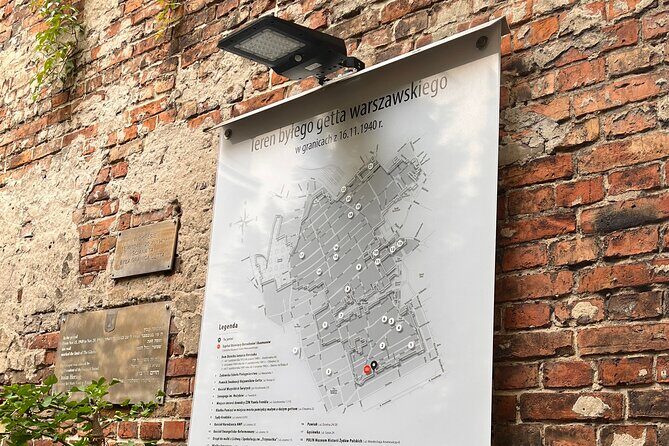
- Zydowski Instytut Historyczny: a documentary archive rooted in real life during the war
- Długa–Nalewki crossroads: the former northern Jewish quarter’s street energy, explained in context
- Ogrod Krasinskich: a calm break tied to the ghetto’s boundaries and exclusions
- Polin Museum area and the Ghetto Heroes monument: how remembrance shows up in daily Warsaw rituals
- Umschlagplatz: the departure-point memorial for transports to Treblinka
A 2.5-hour Warsaw walk with built-in context
If you’ve ever felt like Warsaw’s Jewish history is everywhere but hard to connect, this tour gives you the glue. In about 2 hours 30 minutes, you move through key sites where the past is not locked behind museum walls. It’s on streets, squares, and monuments—and your guide helps you read what you’re seeing.
This is also a small-group experience, capped at 10 travelers, which matters. You can ask questions without feeling like you’re interrupting a lecture. The tour runs in English, and you get a mobile ticket, so you’re not scrambling with paper.
And yes, the price—$112.43 per person—isn’t bargain-basement. But you’re paying for a certified guide and an efficient route through places you’d otherwise need to research separately. For many people, it ends up feeling like better value than doing a free-form walk and trying to connect the dots alone.
You can also read our reviews of more tours and experiences in Warsaw.


Meet Mona: the tone that makes the walk land
A big part of the quality here is the guidance style. Mona is described as gentle, highly skilled at explaining, and emotionally aware. What I find most useful is the balance: the tour gives hope, but it also faces the brutality of what happened.
That tone matters because several stops deal with death, deportation, and resistance. If you want your guide to handle that with clarity and respect—without turning it into dry trivia—this is a good fit.
Stop-by-stop: what each place means and what to look for
Zydowski Instytut Historyczny: documentary history you can picture
Your first stop is Zydowski Instytut Historyczny, where the building once served as one of the centers of Jewish social life in the Warsaw ghetto. Today, it functions as a strong archive of Jewish documentary material.
What makes this start smart is that it doesn’t begin with tragedy first. It begins with life—real community life in wartime conditions—so later sites don’t just feel like museum labels. Instead, they feel like the next chapter of a story.
Even though this stop is only about 15 minutes, you don’t need more time to get the point: archives turn memory into something specific. You’re not only learning that events happened. You’re learning that people lived, worked, gathered, and documented.
Practical note: the admission ticket is free, which helps you keep the walk focused on the guide’s explanation rather than planning around paid entry.
Długa–Nalewki: the street corner where the ghetto had motion
Next you head to Długa Nalewki Street, at the crossing with Długa street—once described as the most lively and vibrant part of the northern Jewish quarter, with shops, manufactories, and stalls.
This stop is short, about 10 minutes, so treat it like a mental reset. The value isn’t staying to browse; it’s learning what you’re looking at. You’ll likely start noticing how street layouts influence movement and commerce, and how that would have shaped daily life under extreme conditions.
What I recommend here: don’t rush past the corners. Stand where the guide tells you to stand, and pay attention to how the street connects to the rest of the route. It’s one of the fastest ways to turn “I heard about the ghetto” into “I can picture the ghetto.”
Again, admission is free for this stop.





Ogrod Krasinskich: the green pause outside the ghetto lines
Then the tour shifts to Ogrod Krasinskich. This is an oasis of calm for Warsaw residents, and it carried a unique wartime distinction: it was excluded from the ghetto during WWII.
That fact changes how you experience the park. It’s not just a break from walking. It becomes evidence of boundaries—who was inside, who was outside, and how the city physically separated lives.
You’ll spend about 20 minutes here. I like this pacing because it gives your brain a chance to absorb what you’ve learned so far. After places tied to community life and street activity, the park helps you feel the contrast between confinement and open space—without needing extra explanation to understand why that difference mattered.
Admission is listed as free.
Polin Museum area and the Ghetto Heroes monument: remembrance in plain sight
The tour then moves to the Warsaw Ghetto Square at Polin Museum, focused on the Monument to the Ghetto Heroes.
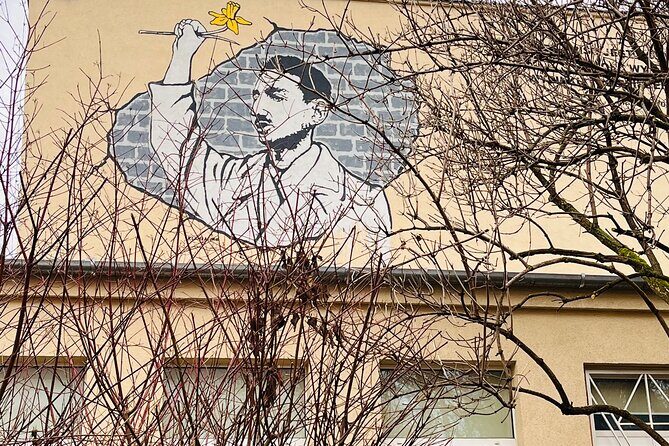
What makes this stop especially meaningful is how it connects history to present-day behavior. You’ll hear about how Varsovians place daffodils on the anniversary of the Ghetto Uprising. That’s a small detail, but it’s exactly the kind of detail that turns a monument into something living.
This is about 30 minutes, which is longer than you might expect for a square. In practice, that time gives you room to absorb the symbolism and ask questions about the uprising and its commemoration—without feeling rushed.
If you only know Warsaw through broad art or grand architecture, this is the moment you realize the city also keeps its memory through rituals.
Admission is free here as well.
Mordechaja Anielewicza at Mila 18: resistance through names and places
Next comes Mordechaja Anielewicza, at the Anielewicz Mound at Mila 18. This memorial marks the deaths of the leaders of the Warsaw Ghetto Uprising, including Anielewicz.
This stop works because it grounds the story in a specific individual and specific location. You’re not just learning that a revolt happened; you’re meeting the people attached to it through place-based remembrance.
It’s about 30 minutes, which suggests the guide will treat the mound as more than a photo stop. I’d plan to slow down here. Look at how the memorial space is shaped and how it invites reflection rather than sightseeing.
As with others on the route, admission is free.
Umschlagplatz: the departure-point memorial for Treblinka transports
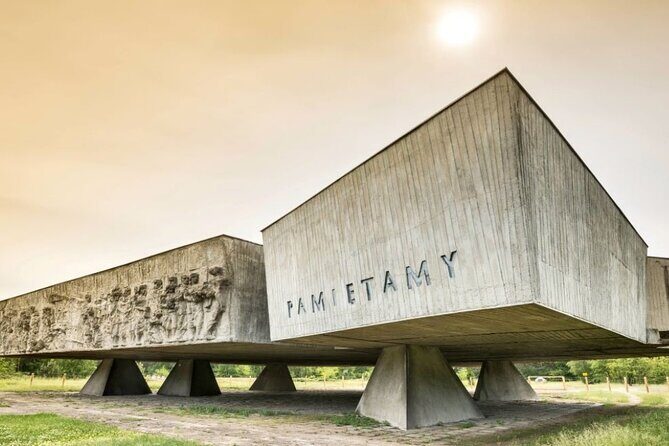
The next stop is Umschlagplatz. The memorial marks the departure point for Jews transported to the Treblinka Extermination Camp, where about 300,000 Jewish people died.
This is the hardest part of the walk, and it’s also one of the most important. The value of this tour is that you don’t arrive cold. By now, you’ve already seen community life and the uprising commemoration, so the meaning of deportation lands with more weight.
This segment is around 15 minutes, which can feel quick. But the purpose here is comprehension and respect. You’re meant to leave with a clear understanding of what this place represents, not to linger until the emotions dull.
Admission is listed as free.
Pomnik Willy’ego Brandta and the way Warsaw carries grief forward
To close, you visit Pomnik Willy’ego Brandta, a memorial to Willy Brandt’s tribute to the murdered Jews of Warsaw and all victims of WWII.
This ending matters for two reasons. First, it shows how remembrance can extend beyond the immediate victims and their families—into the way later leaders and societies responded. Second, it gives the tour a broader WWII frame without pulling attention away from Jewish Warsaw.
You’ll spend about 15 minutes here, and then the tour ends at Willy Brandt Square / the area by Mordechaja Anielewicza. You’ll also get recommendations where to go for coffee in the neighborhood—useful, because you’ll likely want something warm after a subject this intense. Coffee and/or tea isn’t included, so plan to buy your own.
Price, group size, and why the cost feels fair for what you get
At $112.43 per person for about 2 hours 30 minutes, you’re paying for more than a walk. You’re paying for:
- a certified guide
- a route that hits major memorial sites without wasting time
- a small group size (max 10)
- free entry for each listed stop (so the value comes from the explanation, not add-on tickets)
If you were to do this solo, you’d still need to piece together meaning: what each site is, how they connect, and what to notice. This tour basically gives you a guided narrative with just enough structure to stick.
That said, if you prefer self-paced touring and you already know the key sites and terminology, you might feel the price more sharply. For most people, though, the guided layer is the difference between seeing monuments and understanding them.
Practical tips so your experience feels easier
A few things I’d do to get the most out of the route:
- Wear shoes you can walk in comfortably. The tour is not recommended for travelers with mobility or walking problems.
- Keep water handy if you’re in warmer weather; even though there are quiet stretches, it’s still a walking tour.
- Since stops like Umschlagplatz and the mound at Mila 18 are reflective memorial spaces, arrive mentally ready for a slower pace and fewer photos.
- If you want to ask questions, do it early. The small group format means you can build on answers as you go.
You’re also told it’s near public transportation, which helps on a day when you’re already using buses or trams around town. Service animals are allowed.
Should you book Past Meets Present in Warsaw’s Jewish Ghetto?
I think you should book this tour if you want a focused Warsaw Jewish Ghetto experience with a guide who can handle the material with clarity and care. The stop selection works well: you move from documentary archives and community-life context to uprising remembrance and deportation departure-point memorials.
Skip it only if you know you’re not ready for intense, grief-centered content—or if your mobility needs make walking routes difficult. Otherwise, this is the kind of tour that helps you carry the story with you, not just see it for a few minutes.
FAQ
How long is the tour?
The tour lasts about 2 hours 30 minutes.
Where does the tour start and end?
It starts at the Monument of Slowackiplac Bankowy (00-142 Warszawa) and ends at Willy Brandt Square near the Mordechaja Anielewicza area (01-999 Warszawa).
Is the tour offered in English?
Yes. The tour is offered in English.
What is the group size limit?
The tour has a maximum of 10 travelers.
What’s included in the price?
The price includes a certified guide. You also receive a mobile ticket.
Are admission tickets included for the stops?
Yes. The listed stops have admission tickets marked as free.
Is coffee included?
No. Coffee and/or tea is not included, though the tour ends with recommendations for where to get coffee nearby.
Is the tour refundable if plans change?
Free cancellation is available. You can cancel up to 24 hours in advance for a full refund.