Jewish Warsaw reads differently with a guide. You’ll move through the city in a planned line—starting in pre-war Jewish Warsaw and finishing at the POLIN Museum—so the past and present talk to each other. I especially like that the route focuses on places you’d miss on your own, and that it leans on vivid storytelling, not just a list of dates.
Two standout parts are the stop at Grzybowski Square to get bearings fast, and the visit to Nozyk Synagogue, the only synagogue that survived World War II and is still in operation. One consideration: a few key entrances (including the synagogue and the cemetery) are not included, so you’ll want to budget extra on the day.
In This Review
- Key Points at a Glance
- Why This 3-Hour Jewish Warsaw Walk Works
- Grzybowski Square: Where You Get Your Mental Map
- Prozna Street and the People Who Lived There
- Nozyk Synagogue: A WWII Survivor Still Doing Its Work
- Krochmalna and Isaac Bashevis Singer’s Warsaw
- Chlodna Street Backyards: Life Behind the Front Facades
- Keret House: The Narrowest House You Can Find
- Jewish Cemetery: Names, Traditions, and Culture Beyond the Grave
- Pomnik Bohaterów Getta and the Finish at POLIN
- Price and Extras: What You’re Really Paying For
- Who Should Book This Tour—and Who Might Not
- Should You Book Jewish Warsaw with PolinTours?
- FAQ
- How long is the Jewish Warsaw tour?
- What is the price, and what’s included?
- Is pickup available, and where do I meet?
- Are there any entrance fees or admissions I should pay separately?
- Where does the tour end, and can I still visit POLIN?
- What happens if the weather is bad?
Key Points at a Glance
- Begin at Grzybowski Square for a clear first map of Jewish Warsaw before you start walking the streets
- Prozna Street and Krochmalna connect you to everyday Jewish life and to Isaac Bashevis Singer’s Warsaw
- Nozyk Synagogue is a living site, not a memorial only
- Chlodna Street backyards and Keret House show how the urban landscape survived—and changed—in real places
- The Jewish Cemetery stop covers burials and traditions and even touches links like Esperanto and Janusz Korczak
- Finish at POLIN’s building so you’re ready to add museum time with audio guides
Why This 3-Hour Jewish Warsaw Walk Works
This tour is built for people who want depth without spending the whole day on their feet. At about 3 hours, it hits major anchor points across the city—then ends at POLIN Museum of the History of Polish Jews, where you can extend your visit if you want.
The pace is also smart. Many stops are 10–15 minutes, which keeps you moving while your guide sets the context and tells you what to notice. You’ll also ride in an air-conditioned vehicle, which matters in Warsaw’s changing weather, and it’s offered as pickup so you aren’t navigating the route on day one.
One more thing I like for practical travelers: it’s structured as a private group, so your guide can keep the flow for your pace. The tour is in English, and you’ll get a mobile ticket for smoother check-in.
You can also read our reviews of more tours and experiences in Warsaw.


Grzybowski Square: Where You Get Your Mental Map
You start at Pl. Grzybowski 2, Grzybowski Square in the heart of the area that shaped Jewish Warsaw before World War II. This first stop matters because it sets scale and geography early, when it’s easiest to understand what you’re about to see.
Your guide brings you close to what Jewish Warsaw meant, including the fact that Warsaw held the largest Jewish community in Europe until World War II. That context gives you something solid to hang the later street scenes on—Prozna, Chlodna, the cemetery, and the memorial you’ll visit later.
Time here is short (about 15 minutes), but it’s enough to get your bearings. If you’re the type who likes to understand before you wander, this opening stop is a good fit.
Prozna Street and the People Who Lived There
Next comes Ulica Prozna (Prozna Street), described as a Jewish commercial street that has been preserved in its original character. The value of this stop isn’t only architecture—it’s the focus on who the street served and the kinds of families and big names that made their homes in that world.
Even with just a brief 10-minute stop, you’ll likely walk away with a clearer sense of daily life: streets as businesses, communities, and identity—not just “historic sites.” When a guide ties buildings to real inhabitants, you stop seeing the city as a museum piece and start seeing it as lived space.
This is also where a good guide earns their keep. In one of the 5-star reviews, the guide named Mary was praised for explaining both well-known and lesser-known details. That’s exactly what you want here—small stories that make the street feel human.
Nozyk Synagogue: A WWII Survivor Still Doing Its Work
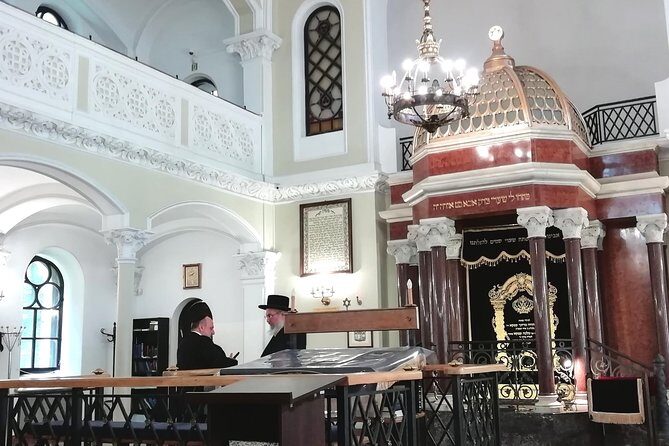
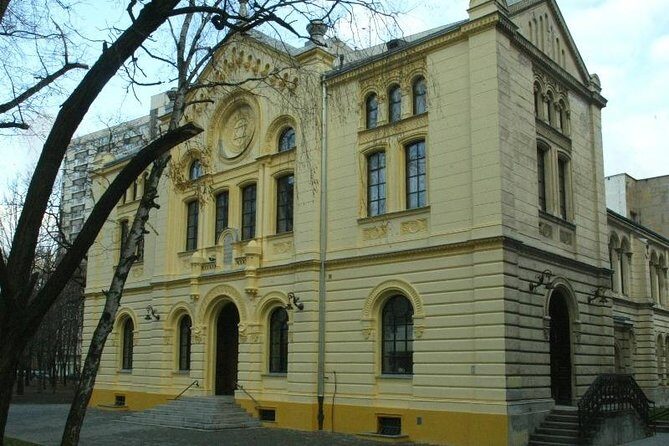
Then you’ll visit Nozyk Synagogue, and this is one of the strongest reasons to choose a guided route. It’s the only synagogue that survived the Second World War and is still in operation, which changes how you experience it.
The stop is about 15 minutes, and it’s not just a photo stop. You’re learning how survival and continuity can sit side by side, right in the same walls where worship happens today. Be ready for a respectful atmosphere, and keep your expectations grounded: this is a working place, so follow the rhythm your guide sets.
Important practical note: admission is not included for this stop. Budget time to handle whatever entry fee is required on site so the visit stays smooth rather than stressful.
Krochmalna and Isaac Bashevis Singer’s Warsaw
After the synagogue, the tour turns literary in a smart way. At Krochmalna, you pass streets and places made vivid in the prose of Isaac Bashevis Singer, the Nobel Prize-winning author.
This section works best if you’re the kind of traveler who likes connecting art to geography. A guide can point out what to notice: the feel of neighborhoods, the sense of community density, and why certain settings show up again and again in a writer’s world.
The stop is brief (around 5 minutes), so don’t expect a long stop-and-read moment. Instead, think of it as a “trigger.” After this, you’ll likely see the area differently if you recognize Singer’s references in Polish-Jewish life.




Chlodna Street Backyards: Life Behind the Front Facades
Next is Chlodna Street, where the focus shifts to the buildings that still show their original condition. This is your chance to look beyond front façades and think about how everyday life unfolded where people actually lived.
Your guide also takes you toward Warsaw backyards, which is where the city feels most real. Backyards are where you sense community routines: movement between buildings, small-scale survival, and the architecture of ordinary living.
You’ll have around 10 minutes here. It’s enough to absorb the idea if your guide gives you clear points of focus. If you like architecture and small-scale urban detail, this is one of the more satisfying stops.
Keret House: The Narrowest House You Can Find
Then you’ll reach Keret House, and yes, it’s known for being the narrowest house in the world. The guide uses this oddity for more than trivia; it becomes a window into how Warsaw uses space and memory—what fits, what survived, and what new ideas replaced older forms.
The stop lasts about 10 minutes, which is perfect for a quick but meaningful story. You’ll get a sense of why “a very small building” can still carry big symbolism when it sits in a neighborhood with layers of history.
This is also one of those stops where a guide helps you look correctly. Without context, it can feel like a quirky stop. With context, it becomes part of the tour’s larger message: history doesn’t vanish; it changes shape.
Jewish Cemetery: Names, Traditions, and Culture Beyond the Grave
The longest walk segment (about 40 minutes) is at the Jewish Cemetery (Cmentarz Żydowski). This is a heavier part of the experience, so plan to move slower than the rest of the tour. You’ll see that the cemetery holds not only family graves, but also famous rabbis, zaddiks, and Jewish families.
The guide also explains Jewish burial traditions, which helps you understand what you’re looking at instead of just reading names. That’s where a guided visit becomes much more valuable than scrolling photos.
One detail I find particularly useful: the cemetery visit also introduces connections such as the history of Esperanto language, Janusz Korczak’s orphanage, and Jewish theater. Those aren’t random add-ons. They widen your understanding of Jewish life beyond one narrow topic.
Admission for this stop is not included, so make sure you plan for the fee. If you’re visiting in hot weather, also consider bringing water and wearing comfortable shoes because you’ll want your energy for the full 40 minutes.
Pomnik Bohaterów Getta and the Finish at POLIN
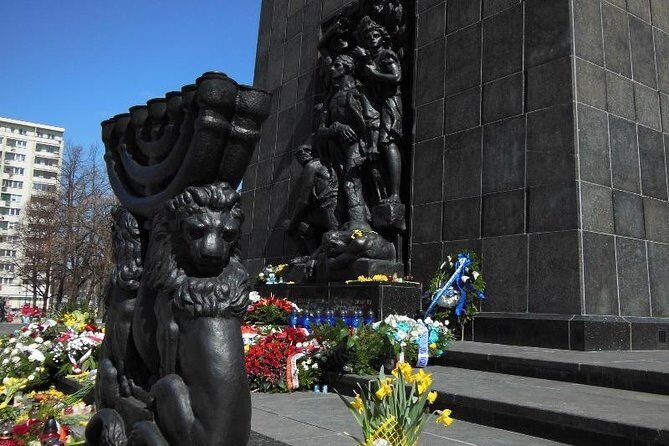
After the cemetery, the tour moves to Pomnik Bohaterów Getta, where you stop at the point associated with Willy Brandt’s famous knee. This is a short stop (about 15 minutes), but it carries weight because it’s a public symbol of remembrance tied to a specific moment in post-war history.
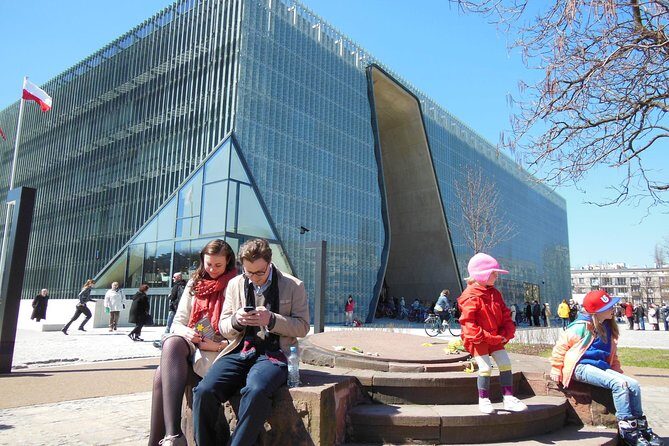
Finally, you end at POLIN Museum of the History of Polish Jews. You’ll spend time admiring the museum’s building and hearing about its symbolism and architecture. The tour ends there, and you can then visit the museum using audio guides.
This ending is smart. Instead of dragging you into an indoor museum for the full duration, the tour sets you up to choose how much museum time you want. If you’re eager, you can go right in. If you want a break, you’ve at least already learned how to read the building and themes.
Price and Extras: What You’re Really Paying For
At $89.35 per person for about 3 hours, this tour is not the cheapest option in Warsaw—but it’s also not just a “walk and go.” You’re paying for a guide who connects multiple sites into a single story arc, plus a more comfortable air-conditioned vehicle with pickup offered.
What’s included is straightforward: air-conditioned vehicle and the tour format with mobile ticket. Many of the street stops are free at the point of visit, which keeps the experience efficient.
What’s not included is where you need a small bit of planning. You should budget for:
- Jewish Warsaw entrance fee: €5.00 per person
- Nozyk Synagogue admission
- Jewish Cemetery admission
I’d treat those as “expected extras,” not surprises. If you budget for them ahead of time, the total cost stays clear and the tour feels like good value for what you cover.
Also, Warsaw is one of those cities where guided, theme-based tours fill up fast. This one is often booked well ahead (on average, around 76 days), so if your dates are fixed, don’t wait until the last minute.
Who Should Book This Tour—and Who Might Not
This tour is a strong match if you want a guided walk that connects streets, sites, and living culture—not only the dramatic parts of history. It’s also a good option if you’d rather rely on your guide to point out details, like what to notice on Chlodna Street backyards or why Keret House is more than a quirky photo moment.
You’ll likely enjoy it even if you’re not an expert. The stop at Grzybowski Square gives you context, the synagogue stop grounds you in something still operating, and POLIN at the end offers an easy next step for deeper exploration.
It may feel less ideal if you want a lot of museum time inside POLIN as part of the same ticket, since the tour ends at the museum building and then points you to audio guides for further viewing. You’ll also want decent walking comfort, though the overall format says most travelers can participate.
Should You Book Jewish Warsaw with PolinTours?
I’d book it if you want Jewish Warsaw to feel like a place you can understand, not a collection of isolated stops. The biggest selling point for me is the way the tour pairs major sites—like Nozyk Synagogue and the Jewish Cemetery—with street-level scenes that help you picture daily life. In the feedback, guides like Mary were specifically praised for adding both familiar and new details, and that’s exactly the kind of guide effect this route needs.
Book it also if you like structure. In three hours, you cover pre-war streets, WWII survival, memorial space, and a museum finish. Just remember to budget for the €5 Jewish Warsaw fee and the sites with admission not included, and you’ll keep the day stress-free.
If you want Jewish Warsaw told in a clear line with time-saving logistics and strong focus on real places, this one is a solid choice.
FAQ
How long is the Jewish Warsaw tour?
It runs for about 3 hours (approx.).
What is the price, and what’s included?
The price is $89.35 per person. The tour includes an air-conditioned vehicle. It offers English guidance, pickup options, and a mobile ticket.
Is pickup available, and where do I meet?
Yes. You can choose hotel pickup (the guide meets you at reception with a PolinTours sign or waits in the car in front of your hotel). The default meeting point is Grzybowski Square (Pl. Grzybowski 2, 00-824 Warszawa). The tour ends at POLIN Museum of the History of Polish Jews (Mordechaja Anielewicza 6, 00-157 Warszawa).
Are there any entrance fees or admissions I should pay separately?
Yes. Jewish Warsaw entrance fee is €5.00 per person. Nozyk Synagogue admission is not included, and Jewish Cemetery admission is not included.
Where does the tour end, and can I still visit POLIN?
The tour ends at the POLIN Museum of the History of Polish Jews. After the guided portion, you can visit the museum using audio guides.
What happens if the weather is bad?
The experience requires good weather. If it’s canceled due to poor weather, you’ll be offered a different date or a full refund.